


Brick is one of the most familiar and reliable building materials available today. It comes in a wide range of colors, textures, and sizes, each suited to different design styles and structural needs. With so many options, choosing the right brick for your project can feel overwhelming.
Selecting the proper type of brick matters for both appearance and performance. For example, using a standard clay brick where a fire brick is needed can lead to cracking or costly repairs. Understanding how different brick types are made and where they perform best helps prevent problems later.
Since 1868, Batchelder & Collins has supplied homeowners and contractors across Norfolk and Williamsburg, Virginia, with quality brick and masonry materials. Our knowledgeable team can help you compare options so you can select the right brick for your project’s purpose and budget.
An Introduction to Bricks: What Are Common Clay Bricks?
Bricks are available in many different sizes, but common clay bricks remain the most widely used. Made from natural clay or shale, these bricks are strong, versatile, and suitable for both residential and commercial construction. Their variety of colors, textures, and finishes allows homeowners and builders to achieve many design styles while maintaining long-term durability.
Why Are Common Clay Bricks So Popular?
Common clay bricks remain a popular building material because they are durable, cost-effective, and easy to work with. Their natural strength and fire resistance make them suitable for a variety of uses, from homes and commercial buildings to retaining walls and columns. They are also ideal for smaller outdoor projects such as garden walls, mailboxes, or grill stations.
What Materials Are Used to Make Common Clay Bricks?
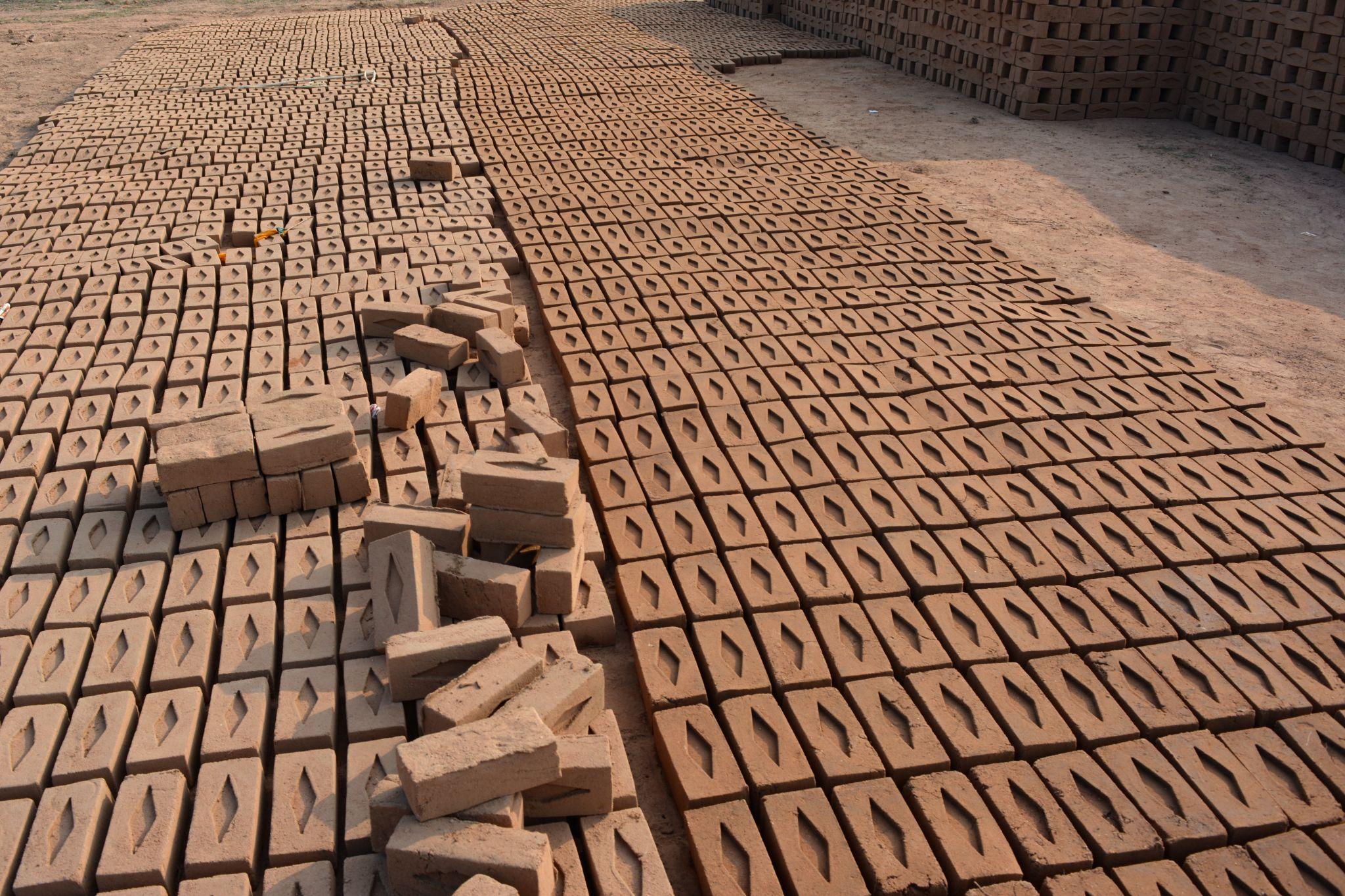
Common clay bricks are primarily made from a mixture of clay, water, sand, and small amounts of other natural minerals that enhance strength and color. After shaping, the bricks are fired in a kiln at high temperatures to create a dense, durable structure. Mortar is then applied during installation to bond the bricks together and protect the structure from moisture and weather damage.
Common Clay Brick Colors and What Affects Them
The color of a common clay brick depends on the minerals and materials used during production, as well as how long and at what temperature the brick is fired. Some of the most common color variations include:
- Red: The most traditional hue, created when iron in the clay reacts to high firing temperatures.
- Brown or beige: Higher lime content produces warmer, earth-toned shades.
- Pink: Bricks with elevated iron content can take on a pinkish tint, adding contrast to modern or decorative designs.
When selecting brick colors for your home or project, the team at Batchelder & Collins can help you review available options and find the best fit for your design goals.
Common Brick Textures and Their Uses
Brick texture influences both appearance and performance. The manufacturing process, whether wire-cut, hand-molded, sand-molded, or tumbled, determines each brick’s finish and surface feel. Common textures include:
- Smooth: Offers a clean, modern look for contemporary spaces.
- Wire-cut: Features fine lines that create subtle depth and character.
- Tumbled or antique: Provides a weathered, rustic look suited to traditional homes.
- Sand-faced or grit-faced: Adds a rough surface for visual interest and improved grip.
Texture affects not only design but also mortar bonding, maintenance, and cost.
How Brick Dimensions Affect Design and Installation
Brick sizing involves more than a single standard measurement. Three types of dimensions of brick are used:
- Specified dimensions: The intended size of the brick before firing.
- Actual dimensions: The measured size after firing, such as 3 5/8 inches by 2 1/4 inches by 7 5/8 inches.
- Nominal dimensions: The overall size, including the mortar joint. Typically about 4 inches by 2 2/3 inches by 8 inches.
Mortar joints generally add 3/8 inch to each brick’s size. These differences affect layout, design, and the total quantity needed for a project. It is always best to verify dimensions with your supplier before ordering.
How Brick Dimensions Are Measured and Laid
Brick dimensions are measured by three factors: depth, height, and length. In the United States, a standard brick typically measures 3 5/8 inches deep, 2 1/4 inches high, and 7 5/8 inches long.
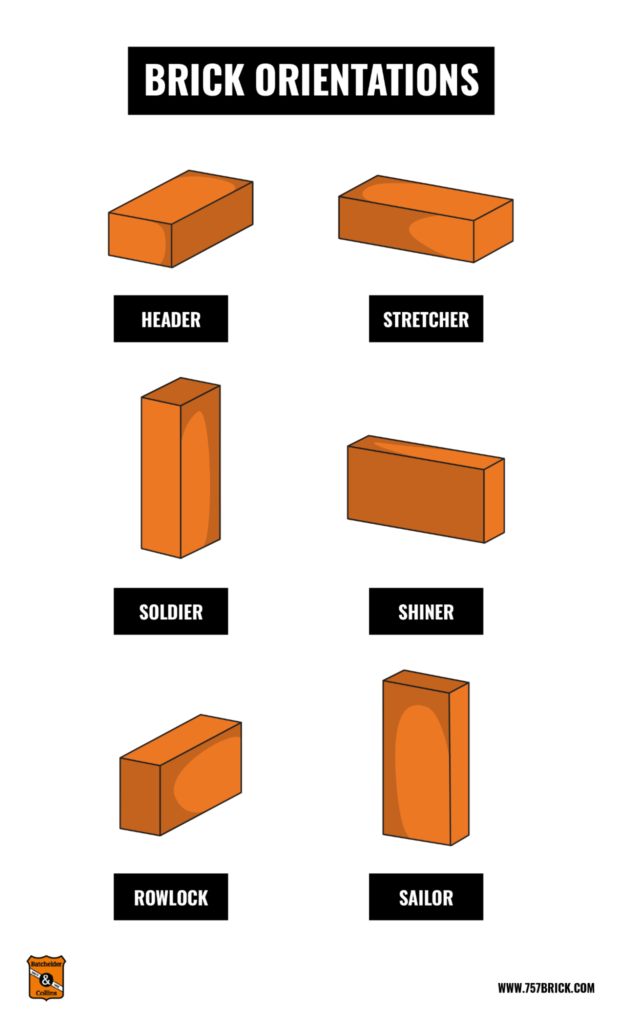
Bricks can be positioned in several ways depending on design and structural needs:
- Header: Laid flat with the short end facing outward.
- Stretcher: Laid flat with the long side facing outward; the most common layout.
- Soldier: Stood upright with the long, narrow face visible.
- Sailor: Stood upright with the broad face visible.
- Rowlock: Turned on its side with the short end facing outward.
- Shiner: Turned on its side with the long side facing outward.
These orientations, known as brick bonds, affect both the pattern and structural stability of the wall or surface.
Common Bricks vs. Facing Bricks: Understanding Their Uses
Not all bricks serve the same purpose. Common bricks are primarily used for structural support in walls and foundations. They often have a rougher texture and minor color variations that make them ideal for areas that will not be visible once the project is complete.
Facing bricks, on the other hand, are selected for their consistent color, texture, and finish. These bricks are used in visible areas such as facades, fireplaces, or entryways where appearance matters most.
Many builders combine both types, using common bricks for structural strength and facing bricks for an attractive exterior finish. Batchelder & Collins supplies both options to homeowners and contractors throughout Norfolk and Williamsburg, Virginia, helping match the right product to each project’s design and performance goals.
Modular vs. Non-Modular Bricks
In the United States, modular bricks are the most common type used in construction. They follow standardized dimensions, usually designed to fit within four-inch increments. This uniform sizing allows for faster installation, easier calculations, and less material waste.
Mortar joint size, typically about three-eighths of an inch thick, is already factored into modular brick sizing. This standard helps builders maintain consistent spacing, reduce waste, and achieve clean, uniform lines across any structure.
Non-modular bricks do not follow a standard size. They are often used for custom designs, historic restorations, or projects that require a unique appearance.
Across Virginia, modular bricks are typically chosen for homes and commercial properties, while non-modular options are preferred for architectural or renovation projects. Batchelder & Collins supplies both modular and non-modular bricks, offering a range of styles and finishes for projects throughout Norfolk and Williamsburg
Standard Brick Sizes Around the World
Brick sizes differ internationally based on local building practices and manufacturing standards. Below are typical examples:
- United States: 3 5/8 inches × 2 1/4 inches × 7 5/8 inches
- United Kingdom: 215 millimeters × 102.5 millimeters × 65 millimeters
- Australia: 230 millimeters × 110 millimeters × 76 millimeters
- India: 190 millimeters × 90 millimeters × 90 millimeters
These variations are important when sourcing materials for restoration projects or matching existing brickwork.
Brick Grades and Weathering Ratings
Bricks are classified by their ability to withstand weather conditions and moisture exposure. The three main grades include:
- SW (Severe Weathering): Designed for exterior use in areas with frequent rain, snow, or freezing temperatures.
- MW (Moderate Weathering): Suitable for regions with occasional moisture or mild weather exposure.
- NW (Negligible Weathering): Used primarily for interior or decorative applications where exposure to the elements is minimal.
Selecting the proper grade is important for long-lasting performance, especially in Virginia’s varied climate. Batchelder & Collins supplies brick products rated for both interior and exterior use, helping homeowners and contractors in Norfolk and Williamsburg choose materials suited to local conditions.
How to Choose the Right Brick for Your Project
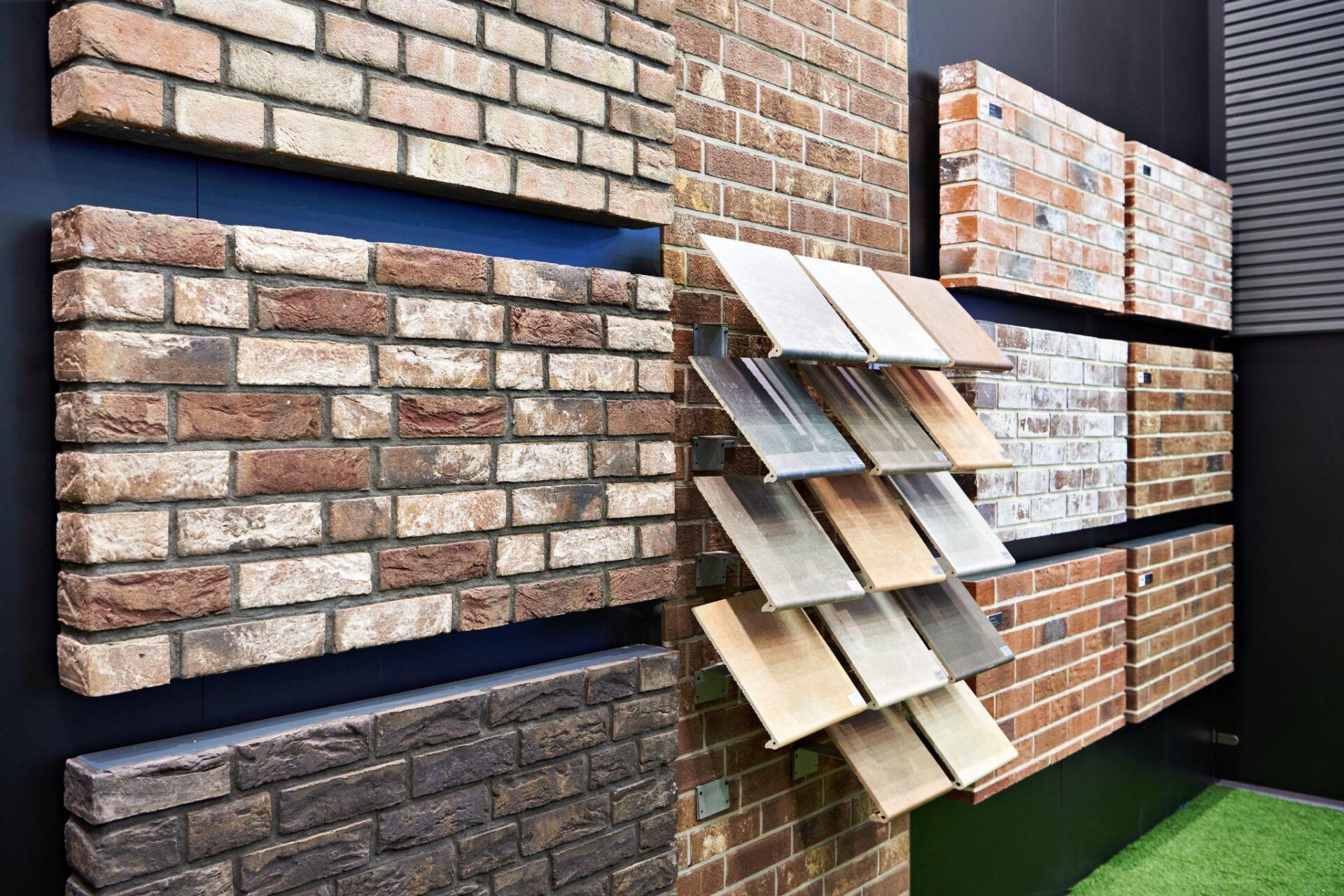
Selecting the right brick starts with understanding how different grades and styles perform. Bricks are classified by both quality and intended use, which determine where they are best applied:
- First-class bricks: High-quality, uniform in color, and free from visible cracks. Used for most residential and commercial projects.
- Second-class bricks: Slight imperfections make these suitable for non-visible or internal walls.
- Third-class bricks: Softer and less durable, used only for temporary structures.
- Fourth-class bricks: Overburnt and irregular in shape, often used as filler material.
How Do I Select the Right Brick Size for My Project?
Brick size affects both design and efficiency. Understanding the main types of bricks can help you select the most practical and visually appealing option for your project.
| Brick Type | Description / Size | Common Use | Benefits |
| Modular Bricks | Standardized size, fits four-inch increments | Residential construction | Simplifies layout, reduces waste |
| Oversized Bricks (Engineer Bricks) | Larger than modular, high compressive strength | Structural/commercial projects | Fewer joints, less mortar, stronger |
| Queen Bricks | Larger rectangular cores | Commercial projects | Improves bonding, reduces material use |
| Closure Bricks | Special shapes for edges/corners | Completing patterns, strengthening joints | Finishes edges cleanly, strengthens joints |
| Roman Bricks | Slim, elongated, smooth finish | Decorative/residential/commercial | Refined appearance, decorative finish |
| Norman Bricks | Slightly taller than Roman bricks | Decorative projects | Better mortar flow, sleek appearance |
| Utility Bricks | Taller/larger than Roman/Norman | Commercial construction | Covers more area with fewer bricks, reduces total units |
| Monarch Bricks | Large, squared-core | Durable structures, commercial | Easy handling, durable |
| Double Monarch Bricks | Twice the height of standard monarch | Heavy-duty/commercial | Covers more height per unit, durable |
Each size offers a balance of function and style. The team at Batchelder & Collins helps homeowners and builders across Norfolk and Williamsburg, Virginia, compare sizes and select the brick that fits their project’s scale, appearance, and purpose.
Types of Brick Available in Hampton Roads
Homeowners and contractors have several brick options depending on the project’s purpose and appearance goals. Batchelder & Collins supplies the following types across Norfolk and Williamsburg:
- Common clay bricks: Traditional building bricks made from natural clay or shale, available in various colors and textures for structural or decorative use.
- Face bricks: A type of clay brick manufactured with consistent color, smoother texture, and a more uniform appearance. They are commonly used on visible exterior walls where appearance matters as much as durability.
- Paving bricks: Solid clay or concrete bricks designed for outdoor surfaces such as patios, walkways, driveways, and porches. These pavers handle moisture, foot traffic, and temperature changes well.
- Fire bricks: Also called refractory bricks, these are made from fireclay and used in high-heat areas such as fireplaces, chimneys, and outdoor ovens. They can withstand temperatures up to 3,000 degrees Fahrenheit.
- Thin brick: A lightweight veneer cut from full-sized bricks, ideal for accent brick walls, backsplashes, or decorative facades where a full brick’s depth is not required.
Each type offers a unique balance of strength, durability, and design flexibility. The Batchelder & Collins team can help you find the right brick for your home, landscape, or commercial project.
Estimating How Many Bricks You Need
Knowing how many bricks to order helps prevent delays and unnecessary costs. Here is a simple way to estimate:
- Measure the area. Multiply the wall’s length by its height to get the total square footage.
- Determine coverage. A standard modular brick course with 3/8-inch mortar joints has an exposed face area of about 20–22 square inches, which works out to about 6.5–7.5 bricks per square foot.
- Calculate quantity. Divide the total wall area by the brick coverage to find how many bricks are needed.
- Add a margin. Order 5–10% more to allow for cutting and breakage.
As a general example, a 100-square-foot wall typically requires around 700 modular bricks. Patterns, arches, and cuts may require additional material.
How Do I Maintain Brickwork Over Time?
Brick is a long-lasting material that requires only minimal maintenance. A few simple habits can preserve its color and structural integrity for years:
- Clean gently. Use plain water and a soft brush. Avoid power washing or acidic cleaners that may damage the surface.
- Inspect annually. Look for cracks, loose mortar, or signs of efflorescence (white mineral deposits).
- Repair mortar when needed. Repointing weakened joints helps prevent moisture intrusion.
- Manage drainage. Keep gutters and downspouts clear so water does not collect near brick surfaces.
- Seal selectively. In high-moisture or coastal environments, a breathable sealant can add extra protection.
These simple steps can extend the life of any brick project. Homeowners across Norfolk and Williamsburg often rely on this Virginia masonry supplier to recommend maintenance-friendly brick and mortar options suited to local weather conditions.
Why Customers Choose Batchelder & Collins
For more than 150 years, Batchelder & Collins has been a trusted source for brick and masonry materials across Hampton Roads, including Norfolk and Williamsburg. The company offers a broad selection of brick sizes, colors, and finishes suited for projects ranging from patios and walkways to fireplaces and decorative walls.
We remain dedicated to providing durable, high-quality products that meet state and regional building standards. Whether you are working on a home improvement, restoration, or commercial design, the Batchelder & Collins team can help you select materials that achieve your project’s desired look and performance.
Testimonials
“I love this place. They always have what I need and all the staff is so very helpful ! Keep up the good work.” — Debra L.
“Very helpful staff. Helped me in deciding how many and of which bricks to get. Very quick in and out process they have set up.” — Victor P.
Frequently Asked Questions
Can Bricks Be Used for Outdoor Projects?
Yes. Brick performs exceptionally well outdoors because it resists moisture, temperature changes, and wear. It is commonly used for patios, walkways, fire pits, and exterior walls.
Are Bricks Energy-Efficient and Sustainable?
Brick naturally regulates indoor temperatures by storing and slowly releasing heat, which can help reduce energy use. It is also made from abundant natural materials such as clay and shale and can often be reused or recycled.
Is It Better to Paint or Stain Brick?
Both options are possible, but staining is typically preferred. Paint forms a surface layer that can trap moisture, while stain penetrates the brick’s surface, allowing it to breathe and maintain its natural appearance with less upkeep.
How Do I Know Which Type of Brick Is Right for My Project?
The best choice depends on your project’s location, appearance goals, and durability needs. For example, paving bricks work well outdoors, while thin brick provides a lightweight option for decorative interiors. The Batchelder & Collins staff can explain the differences between materials and help you find the best match for your design.
Fulfill Your Home and Backyard Dreams with Our Quality Bricks
For more than 150 years, Batchelder & Collins has supplied homeowners and contractors across Hampton Roads, including Norfolk and Williamsburg, with reliable brick and masonry materials. Whether you are planning a new patio, accent wall, or construction project, our company offers a wide range of brick options to match your project’s style and function.
To learn more or request assistance with material selection, call 757-625-2506 or reach out through our contact form. The team at Batchelder & Collins is ready to help you find the right brick for your next home or outdoor project.


